AFIN8003 Week 1 - Introduction
Banking and Financial Intermediation
Department of Applied Finance
2026-07-30
Course admin
Unit Convenor
- Dr. Mingze Gao.
- Deputy Director of Macquarie University FinTech and Banking Research Centre.
- Lecturer in Finance, MQBS.
- PhD in Finance (USyd),
- Grad.Cert. in Computing (UNSW),
- BCom (Hon) in Finance (USyd),
- BCom in Econometrics and Finance (USyd).
- Visiting Fellow (USyd).
- Postdoctoral Research Fellow (USyd), 2021-2023.
- Research in banking and corporate finance.
Contact:
- Room 549, 4ER.
- Email: mingze.gao@mq.edu.au
- Website: https://mingze-gao.com

About this course
Course description:
- This unit applies finance theory to the context of operational decision-making and risk management in banking and financial intermediation.
- The major decision areas for banking management are covered within a regulatory and corporate responsibility framework.
- Major risks of banks and financial intermediation are being examined.
Key approaches:
- Research-informed teaching.
- Australian focus with global evidence.
- Priority on bank risk management.
What you need (and don’t need) for this course
- No banking background assumed. We build everything from scratch.
- The hardest math is high-school algebra. Every model in this course comes with a plain-English story first — if you understand the story, the symbols are just shorthand.
- What you do need: curiosity about why banks keep failing in spectacular ways — and how the survivors manage not to.
Course materials
The course materials are prepared based on several sources. Additional references are provided at the end of each week’s slides.
Weekly topics
- Introduction to banking and financial intermediation
- Risks and regulation
- Capital management and adequacy
- Interest rate risk
- Market risk
- Credit risk I: individual loan risk
- Credit risk II: loan portfolio and concentration risk
- Liquidity risk
- Liability and liquidity management
- Sovereign risk, foreign exchange risk, and off-balance-sheet risk
- Loan sales and securitisation
- Emerging topics in bank risk management
Assessments
There are three assessments in this course.
| Assessment | Weight | Hurdle | When | Short Extension? | AI Approach |
|---|---|---|---|---|---|
| Individual assignment | 30% | No | Due in Week 7 | Yes | Open |
| Group assignment | 30% | No | Due in Week 12 | No | Open |
| Final exam | 40% | No | University Examination Period | No | Observed |
Roadmap
This week answers one question: why do banks exist at all?
- The financial system and financial intermediation — the big picture.
- Why frictionless markets make banks redundant — and why real markets don’t.
- The Diamond and Dybvig (1983) model — banks as providers of liquidity insurance.
- The Diamond (1984) model — banks as delegated monitors.
- A tour of the Australian financial services industry — ADIs, non-ADIs, insurers and fund managers.
Discussion
Before we start: you deposit $1,000 in a bank at ~4% p.a. while the bank lends it out at ~6% p.a. Why don’t savers and borrowers just cut out the middleman?
Background
You used a bank three times before breakfast
Think about your morning:
- You tapped your card for a coffee — a bank cleared that payment in about two seconds.
- Your rent or mortgage went out overnight by direct debit — a bank moved it.
- Your salary or youth allowance landed last week — through a bank.
- Even your coffee shop only exists because someone lent the owner money to fit it out.
Banking is invisible infrastructure — like plumbing, nobody thinks about it until it breaks.
This course is about what happens on the other side of the tap: where your money goes, what risks it takes on the way, and why the whole system occasionally catches fire.
Financial system
A financial system encompasses various financial intermediaries, markets, regulators, and infrastructure in the generation and distribution of financial resources.
A well developed smoothly functioning financial system facilitates the efficient life-cycle allocation of household consumption and the efficient allocation of physical capital to its most productive use in the business sector (Merton 1993).
Robert Merton, Nobel laureate (1997)
Financial intermediation
Financial intermediation is part of the financial system.
- It is the process by which financial intermediaries, such as banks, facilitate the flow of funds between savers and borrowers.
- Banks are a major part of financial intermediation.
- Banks were essentially the only provider of financial intermediation.
- Since 1970s, dramatic development of the financial market:
- Other intermediaries performing similar functions of banks.
- FinTech, bigtech in money and credit services.
- Cryptocurrencies, central bank digital currencies.
- …
Why is banking and financial intermediation necessary?
Economists spent a century arguing about whether banks actually matter. A debate in three acts:
- Finance is critical in real economic activities.
- Excessive debt levels and liquidity constraints could lead to downward spirals in economic activity, as witnessed during the Great Depression (Fisher 1933)1
- “Finance is a veil”, late 50s to early 70s.
- In a frictionless market, firm value is not affected by its capital structure so that financial intermediaries can be redundant (Modigliani and Miller 1958).
- Finance is relevant, since 70s.
- Market frictions amplify economic cycles, particularly during downturns. Monetary factors alone are insufficient to explain the Great Depression’s depth and persistence - it’s more because of the collapse of the bank credit (Bernanke 1983, the “financial accelerator”).
Why is banking and financial intermediation necessary?
A banking analogue of the Modigliani and Miller (1958) theorem showing that banks are useless with perfect financial markets.
- An economy of firms, households, banks and a bond market.
- Households consume, and lend through banks or through the bond market.
- Firms produce, and borrow from banks or from households through the bond market.
- Banks borrow from households and lend to firms.
In a competitive equilibrium, banks make zero profit and have no impact on other agents’ decisions. Firms are indifferent between bank credit and bonds. (Freixas and Rochet 2023)
- Banks and bond market are perfect substitutes in a market without frictions.
Why is banking and financial intermediation necessary?
The existence of banks (and other financial intermediaries) must be justified by their roles in mitigating market frictions.
- Information asymmetry.
- …
From an industrial organization perspective, the structure and competition of banking sector should have a unique impact on the economy, which warrants for regulation.
- The services provided by banks to borrowers and savers must be costly.
- Monitoring costs.
- Liquidity costs.
- …
Empirical evidence
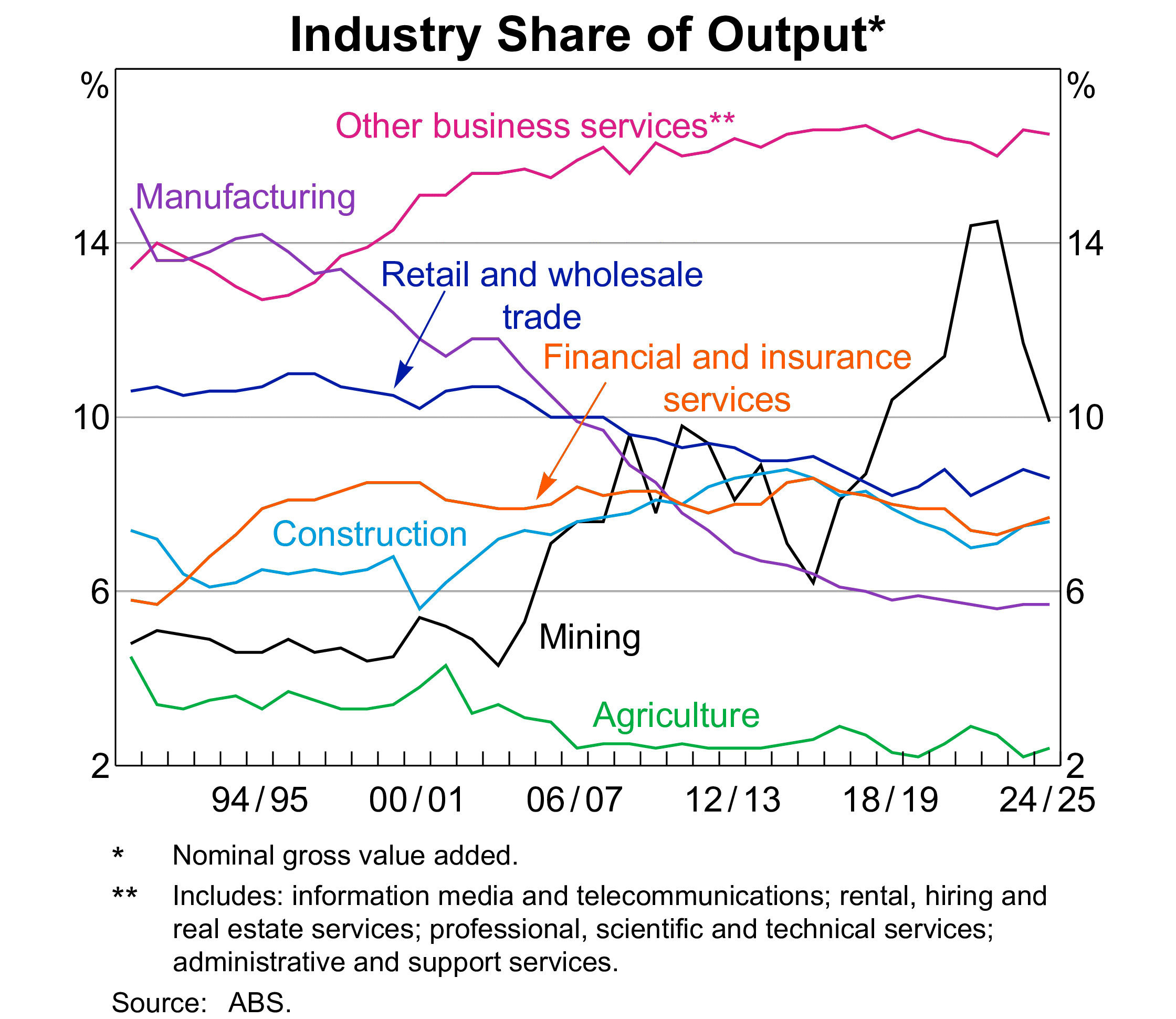
Figure 1: The share of financial sector of economic output is relatively stable
The specialness of bank and financial intermediaries
Importance of banks and financial intermediaries
We start this banking course by studying the importance of banks in improving the efficient allocation of financial resources in the economy.
- Specifically, why market frictions necessitate banks.
- A simple look at the Diamond and Dybvig (1983) model.
An economy without financial intermediaries
The Diamond and Dybvig (1983) model
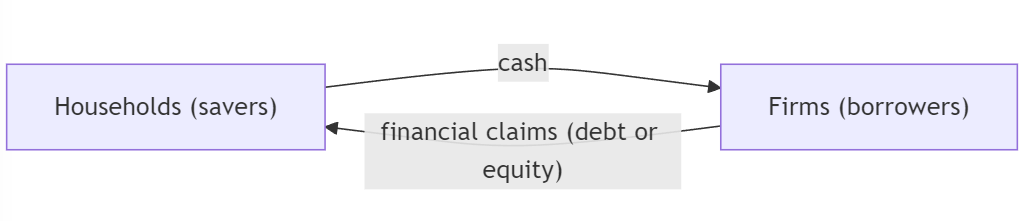
Some frictions render this setup unappealing.
- Households are uncertain about when they will need their money. They might need it either in the short term or in the long term.
- Firms need long-term capital in production.
- Banks1 are best positioned to perform maturity transformation.
The idea in plain English first
The Diamond and Dybvig (1983) model
You have $10,000. You face an everyday dilemma:
- Lock it away long-term (a term deposit, an investment) → it earns more. But if your car dies on Tuesday, you can’t touch it — or you break it early at a painful penalty.
- Keep it in cash → always available. But it earns nothing.
Here’s the trick: your emergency and your neighbour’s emergency probably won’t happen in the same week.
A bank pools thousands of people like you. Since only a few need cash at any moment, the pool can invest long-term and still pay whoever knocks on the door. Everyone gets the best of both worlds.
That’s liquidity insurance — and it won Diamond and Dybvig the 2022 Nobel prize. Now let’s say the same thing with symbols.
Model setup
The Diamond and Dybvig (1983) model
Let’s see a simplified Diamond and Dybvig (1983) model:1
- Three dates, \(t=0,1,2.\) (today, “Tuesday”, the long run)
- Each household has initial goods of 1 unit at \(t=0\).
- They can invest long-term to earn \(R>1\) at \(t=2\) for consumption (the reward for patience), or
- store it for consumption at \(t=1\) or \(t=2\), which remains 1 unit (cash under the mattress).
- If they choose to liquidate the long-term investment at \(t=1\), they get \(l<1\) (the penalty for breaking the piggy bank early).
- Households do not know whether they need to consume early at \(t=1\).
- A sudden need for money, e.g., medical bills.2
- Key assumption.
Model implications
The Diamond and Dybvig (1983) model
You don’t need the math — the implications are what matter:
- We can determine the theoretical optimal allocation.
- Without transactions between agents, the allocation is inefficient.
- With transactions (financial market/bond market), the allocation is still not efficient.
- Consumption can be transferred between \(t=1\) and \(t=2\).
- Liquidation costs avoided.
- The optimal allocation can be achieved with competitive banks offering deposit contracts and investing in the long-term.
- A bank simultaneously takes deposits from the public and grants loans to borrowers.
- Transform short-term deposits to long-term assets.
Maturity transformation by bank
The Diamond and Dybvig (1983) model
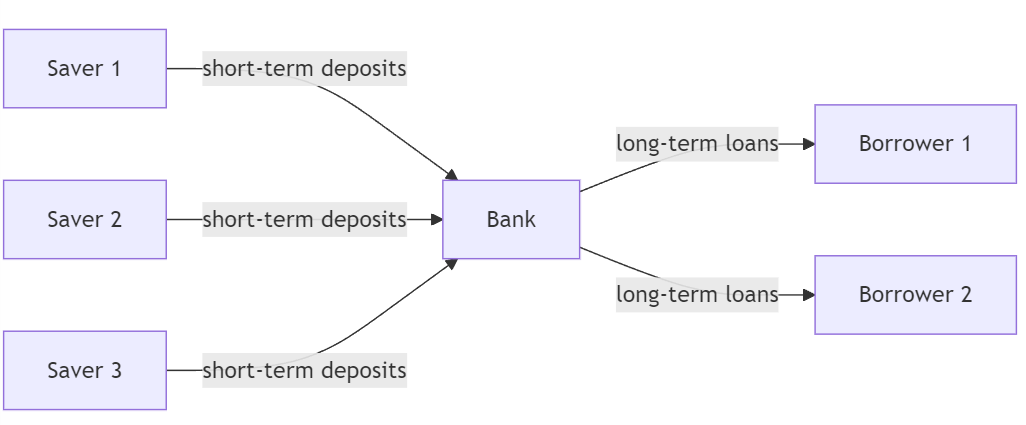
Figure 3: A simple diagram of bank’s maturity transformation
- This structure, however, gives rise to bank runs where everyone withdraws at \(t=1\).
- The insurance only works if not everyone claims at once. If everyone panics and knocks on the door on the same day, the pool collapses — even if the bank did nothing wrong.
- The Silicon Valley Bank (SVB) failure in March 2023 is a typical bank run — US$42 billion walked out in a single day. We will dissect exactly how it died in Weeks 4 and 8. Consider this the season trailer.
- No other risks considered.
Beyond maturity transformation
Asset transformation, risk transformation and liquidity transformation.
- Banks make investments in borrowers - primary claims - illiquid and risky.
- Savers deposit in banks - secondary claims - liquid and low risk.
Information frictions
Banks do more than maturity transformation.
Banks are also better positioned to mitigate informational frictions in the market due to economies of scale.
- The cost advantages by spreading the costs over a large number of customers, transactions, and output.
- The costs arise from all aspects of lending process: screening, monitoring, and auditing; all of which can be costly for individual household lenders.
Information asymmetry and costs
Think of a landlord and a tenant — the landlord’s problem is the lender’s problem:
- Screening costs in the context of adverse selection (Broecker 1990).
- Borrower knows better about its quality than lenders.
- Occurs before a loan is made. (Vetting the tenant before signing the lease.)
- Monitoring costs in the context of moral hazard (Holmstrom and Tirole 1997).
- Borrower could engage in opportunistic behaviour with private benefits at the cost of lenders.
- Occurs after a loan is made. (The quarterly inspection.)
- Auditing costs in the context of borrower failing to meet contractual obligations.
- Renegotiate loan terms, recover loan value, etc.
- Occurs in case of non-compliance. (Chasing the unpaid rent.)
Banks as delegated monitor
Picture this: 1,000 savers jointly fund 10 small businesses. Who makes sure the money isn’t being wasted?
- If everyone checks → 1,000 people duplicating the same homework. Absurdly wasteful.
- If no one checks → borrowers know no one is watching. Also a disaster.
- The fix: appoint one monitor to check on everyone’s behalf — that’s the bank.
Diamond (1984) turned this into a model (again, the symbols are just the story above):
- \(n\) large borrowers, each requires \(1\) unit of funds and costs \(K\) to monitor, and
- \(nm\) small savers each with \(1/m\) units of funds (\(m>1\)); a total of \(n\) units of funds.
- Total monitoring costs is \(nmK\) if savers individually monitor, but
- \(nK\) if the bank acts as the monitor on behalf of savers (one monitor per borrower).
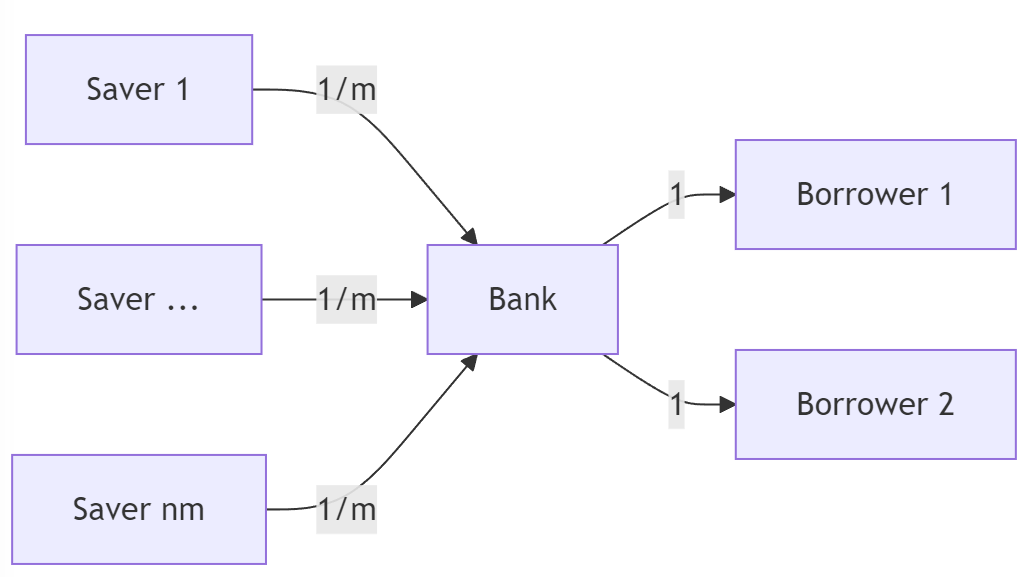
Figure 4: A simple diagram of bank as delegated monitor
Banks as delegated monitor
Economies of scale is evident:
- Total monitoring costs reduced from \(nmK\) to \(nK\).
- Delegated monitoring reduces unnecessary duplication of monitoring costs.
- The more savers per borrower (\(m\)), the greater the savings from delegation.
A caveat. It must be that the cost of delegation is smaller than the benefits gained from economies of scale. The delegated monitor needs to be monitored, too.
- Requirement is that the bank needs to be sufficiently diversified (Diamond 1984).
The Holmstrom and Tirole (1997) model
Key insights:
- Firms with profitable projects will still be credit rationed if they do not have sufficient internal capital - they will not be able to raise capital from the market.
- Banks can alleviate this problem by providing credit to firms and monitoring borrowers.
- Banks improve the market.
Changing dynamics
FinTech, bigtech, and more
- Traditional “banks”, taking deposits and grant loans, are facing increasing challenges.
- Global competition with other banks.
- Competition with nonbanks or “shadow banks”.
- Many of banks’ functions can be now performed by nonbanks.
- For example, FinTech firms may better reduce information asymmetry through screening and monitoring based on big data and advanced technologies (AI/ML), improved and customized services, and reduced cost of search and match with platform economy.
- More importantly, nonbanks are unregulated or less regulated than banks.
- Central bank digital currencies (CBDC).
- Increased funding costs for banks if households hold CBDC instead of bank deposits.
- Technological advancement.
- Online/mobile banking simplifies transfer of funds.
- Transition from “originate and hold” to “originate and distribute” business model.
The financial services industry
Quick show of hands
Before the taxonomy — let’s map the room:
- Who banks with one of the Big 4 (CBA, ANZ, NAB, Westpac)?
- Who uses a digital bank — Up, ING, Ubank, Revolut?
- Who has ever set foot inside a credit union?
- Who checked their super balance in the last month? (If not — do it this week. It’s your money.)
Whatever you answered — everything you just named fits into one of three boxes, defined by the RBA. Let’s open them.
Types of financial institutions
Australia’s central bank, the Reserve Bank of Australia (RBA), classifies financial institutions into broadly three categories:1
- Authorised deposit-taking institutions (ADIs)
- Non-ADI financial institutions
- Insurers and fund managers
Authorised deposit-taking institutions (ADIs)
Financial institutions authorised by the Australian Prudential Regulation Authority (APRA) to carry out financial intermediation are called authorised deposit-taking institutions (ADIs).
- These deposit-taking institutions (DIs) are the focus of this course.
- Three DI groups in Australia: banks, building societies and credit unions.
| Assets | Liabilities and Equity |
|---|---|
| Loans | Deposits |
| Other assets | Other liabilities |
| Equity |
Banks
Deposit-taking institutions (DIs)
- Banks are the largest depository institutions in terms of size.
- Major difference between banks and credit unions/savings institutions: banks have more varied assets and liabilities.
- Differences in operating characteristics and profitability across size classes - for instance, with regards to the size of the commercial loan portfolio.
Largest banks globally
Largest banks by total assets in 2025, according to S&P Global Market Intelligence:
| Rank | Company | Headquarter | Total assets ($B) |
|---|---|---|---|
| 1 | Industrial and Commercial Bank of China Ltd. | Mainland China | 6,688.74 |
| 2 | Agricultural Bank of China Ltd. | Mainland China | 5,923.76 |
| 3 | China Construction Bank Corp. | Mainland China | 5,558.38 |
| 4 | Bank of China Ltd. | Mainland China | 4,803.51 |
| 5 | JPMorgan Chase & Co. | US | 4,002.81 |
| 6 | Bank of America Corp. | US | 3,261.52 |
| 7 | HSBC Holdings PLC | UK | 2,989.81 |
| 8 | BNP Paribas SA | France | 2,809.83 |
| 9 | Crédit Agricole Group | France | 2,693.58 |
| 10 | Mitsubishi UFJ Financial Group Inc. | Japan | 2,628.12 |
| … | |||
| 45 | Commonwealth Bank of Australia | Australia | 809.81 |
Two things to notice
- Four of the five biggest banks on Earth are Chinese — a quiet shift most people haven’t registered.
- Australia’s biggest bank ranks only #45 globally — yet at home, the Big 4 dominate the market. Small pond, very big fish. That concentration is a recurring theme in this course.
Banks in Australia
Four major banks: CBA, ANZ, NAB, and Westpac.
- national focus, “four pillars policy”
- offer corporate and retail banking services in Australia, NZ and Papua New Guinea
- they also operate in Asia, the US and the UK
- focus on lending (around 70 per cent).
Other major banks: Macquarie Bank, Bendigo and Adelaide Bank, Bank of Queensland, Suncorp, AMP Bank, etc.
Regional banks
- regional focus with operations across state borders
- large proportion of assets invested in residential housing loans due to their origins as building societies
- focus on lending
Banks in Australia: funding composition
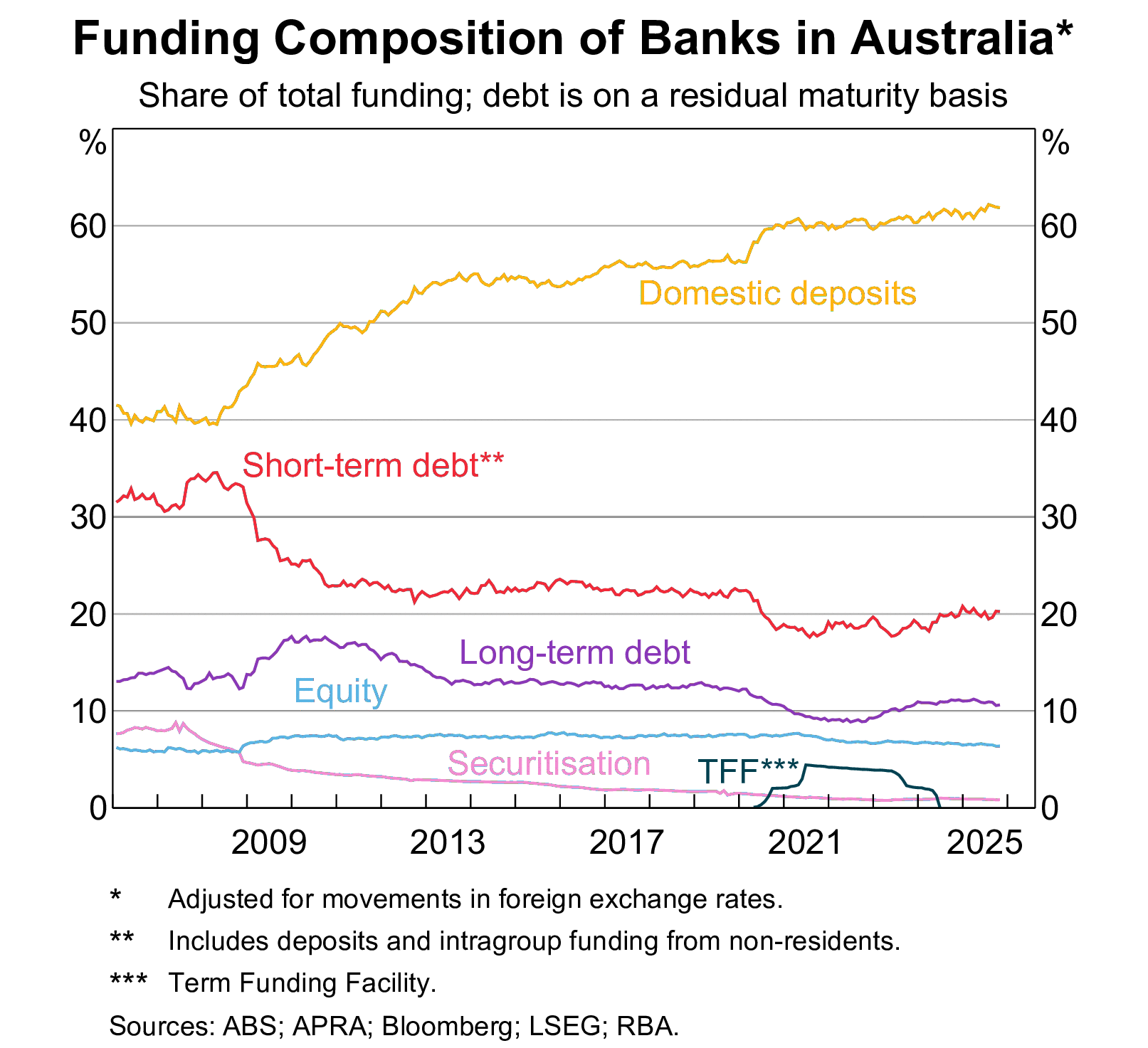
Figure 5: Funding composition of banks in Australia
Banks in Australia: net interest margin
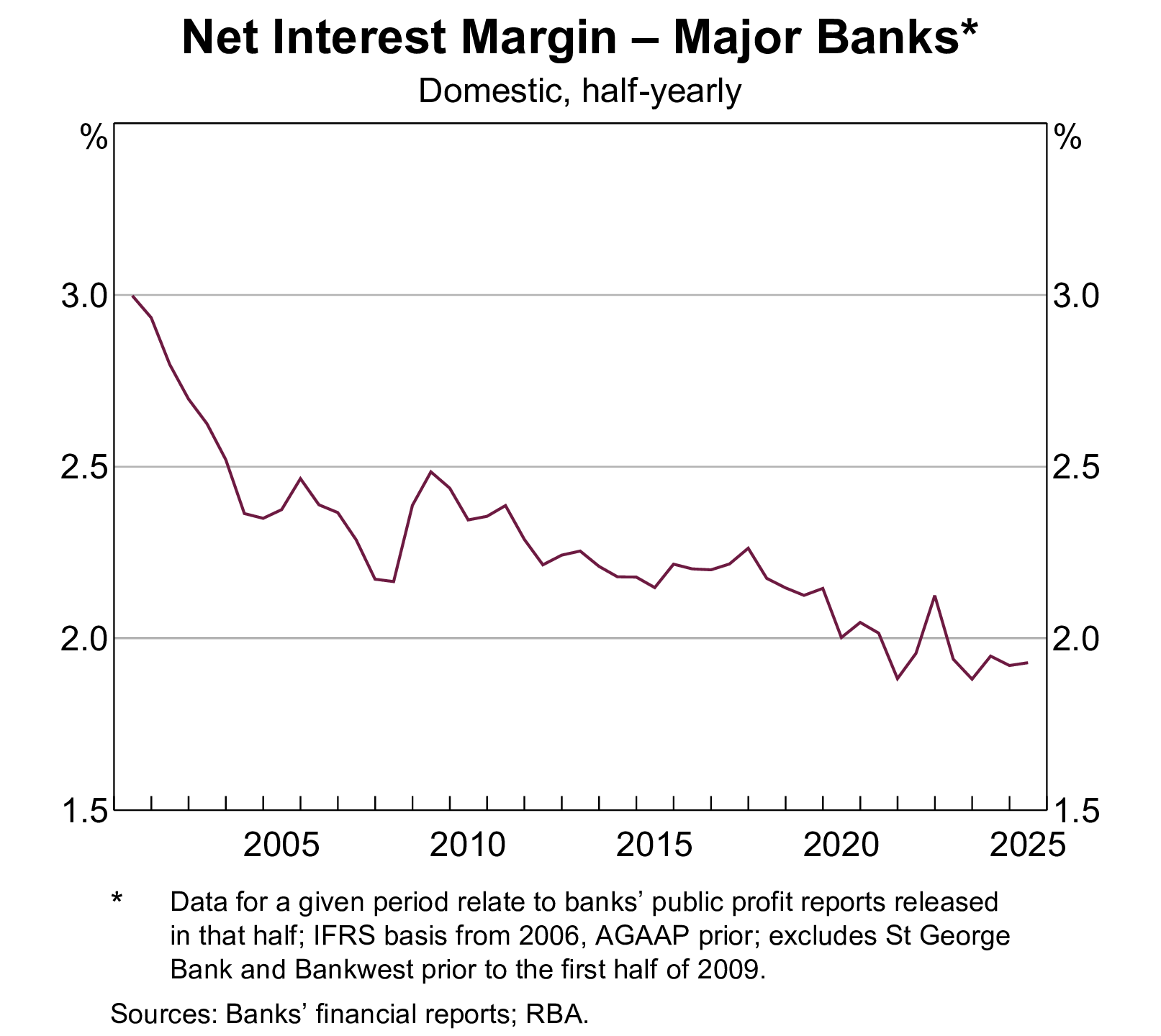
Figure 6: NIM of banks in Australia
Banks in Australia: non-performing assets
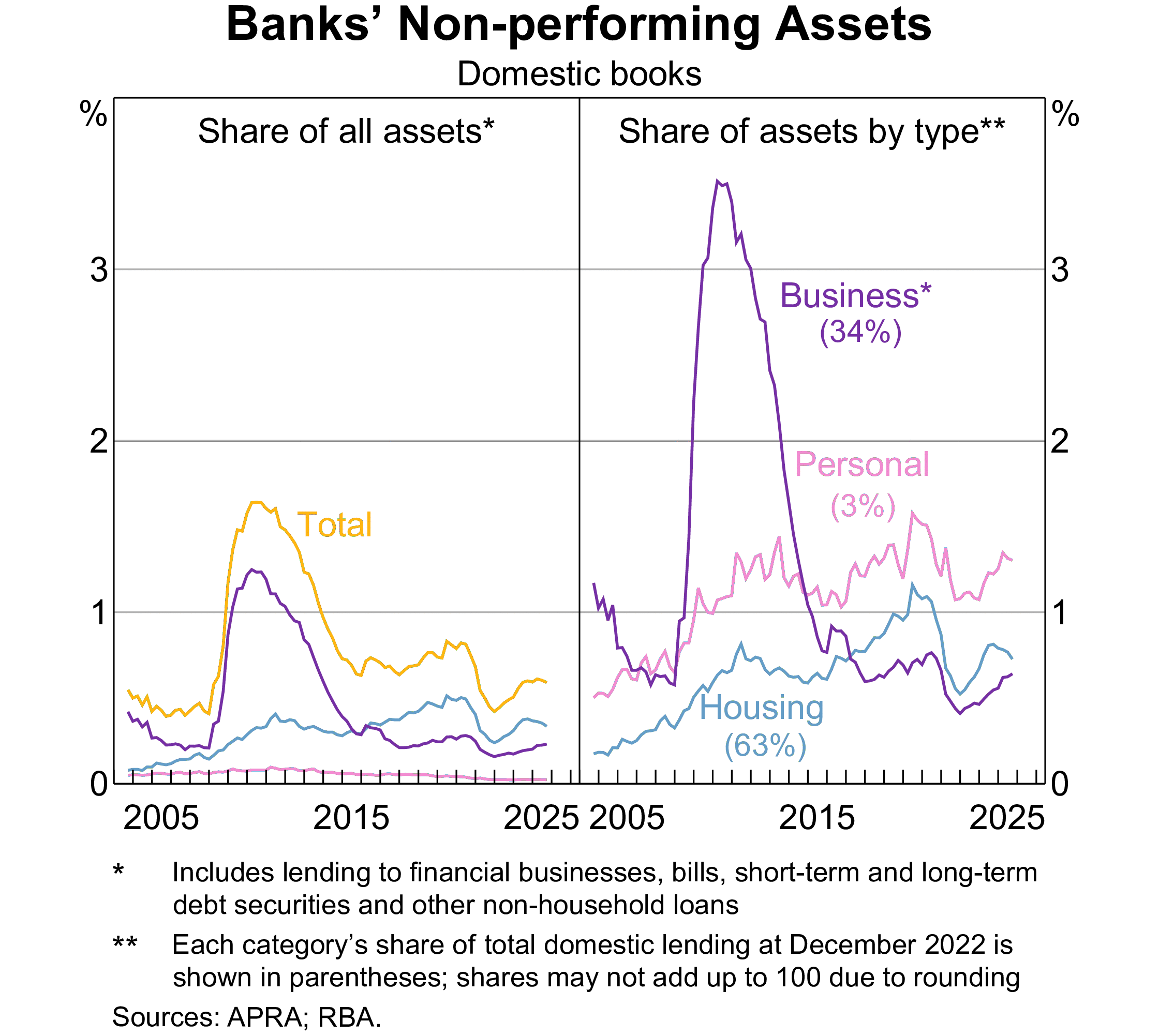
Figure 7: Non-performing assets of banks in Australia
Credit unions and building societies
Deposit-taking institutions (DIs)
Credit Unions
- Mutual cooperative organisations that provide deposit facilities, personal and housing loans and payments services to their members, who are usually linked by way of some common bond
- Primarily provide deposit facilities, personal and housing loans and payments services
- Members are usually linked by a common bond, such as a trade union or locality
- In 2014 there were 84 credit unions in Australia, compared to 348 in 1992
Building Societies
- DIs that traditionally were mutually owned, but are increasingly issuing share capital
- Depositors are members of the society
- In 2014 there were 9 building societies, compared to 31 in 1992
Both credit unions and building societies are subject to the same prudential regulations as banks.
A disappearing species
From 348 credit unions in 1992 to only 36 credit unions and building societies combined in 2023.
Quick discussion: why do you think they keep merging or converting into banks? (Hint: think about the fixed costs of regulation and technology — and who can spread them over more customers.)
Non-ADI financial institutions
- Money market corporations (broker-dealers)
- Primarily wholesale credit market.
- Investing, investment banking, market making, trading.
- Finance companies
- Loans to households and SMEs.
- Funding from debentures and unsecured notes.
- Securitisers
- Special-purpose vehicles (SPVs) that issue securities backed by pools of assets (e.g. residential mortgage-backed securities).
Insurers and fund managers
- Insurance companies
- Life insurers: provide life, accident and disability insurance, annuities, investment and superannuation products.
- General insurers: provide insurance for property, motor vehicles, employers’ liability, etc.
- Health insurers: provide insurance for private health costs.
- Medibank, Bupa, HCF, etc.
- Superannuation and approved deposit funds
- Public unit trusts
- Cash management trusts
- Common funds
- Friendly societies
Life insurers in Australia
Top 10 life insurers by total assets in 2023:
| Company | Total Assets | Share |
|---|---|---|
| Resolution Life Australasia Limited (former AMP) | 25,636,094,000 | 21.11% |
| Challenger Life Company Limited | 25,025,565,000 | 20.61% |
| AIA Australia Limited | 14,999,640,516 | 12.35% |
| TAL Life Limited | 12,451,370,000 | 10.25% |
| Zurich Australia Limited | 8,268,873,000 | 6.81% |
| MLC Limited | 6,775,456,183 | 5.58% |
| Munich Reinsurance Company of Australasia Limited | 5,401,974,315 | 4.45% |
| Swiss Re Life & Health Australia Limited | 3,454,823,000 | 2.85% |
| TAL Life Insurance Services Limited | 3,200,477,631 | 2.64% |
| Hannover Life Re of Australasia Ltd | 3,053,576,000 | 2.51% |
Superannuation funds
Australian governments have encouraged national savings over last decades through:
- taxation incentives,
- legislative requirements, and
- award superannuation.
Sector represents 30% of the assets of all FIs as at December 2021.
Australian pension assets projected to surpass the UK and Canada by 2031, to rise to second in the world.1
Managed by:
- specialist superannuation fund managers, e.g., UniSuper
- self-managed superannuation funds (SMSF)
Non-bank financial institutions (NBFIs)
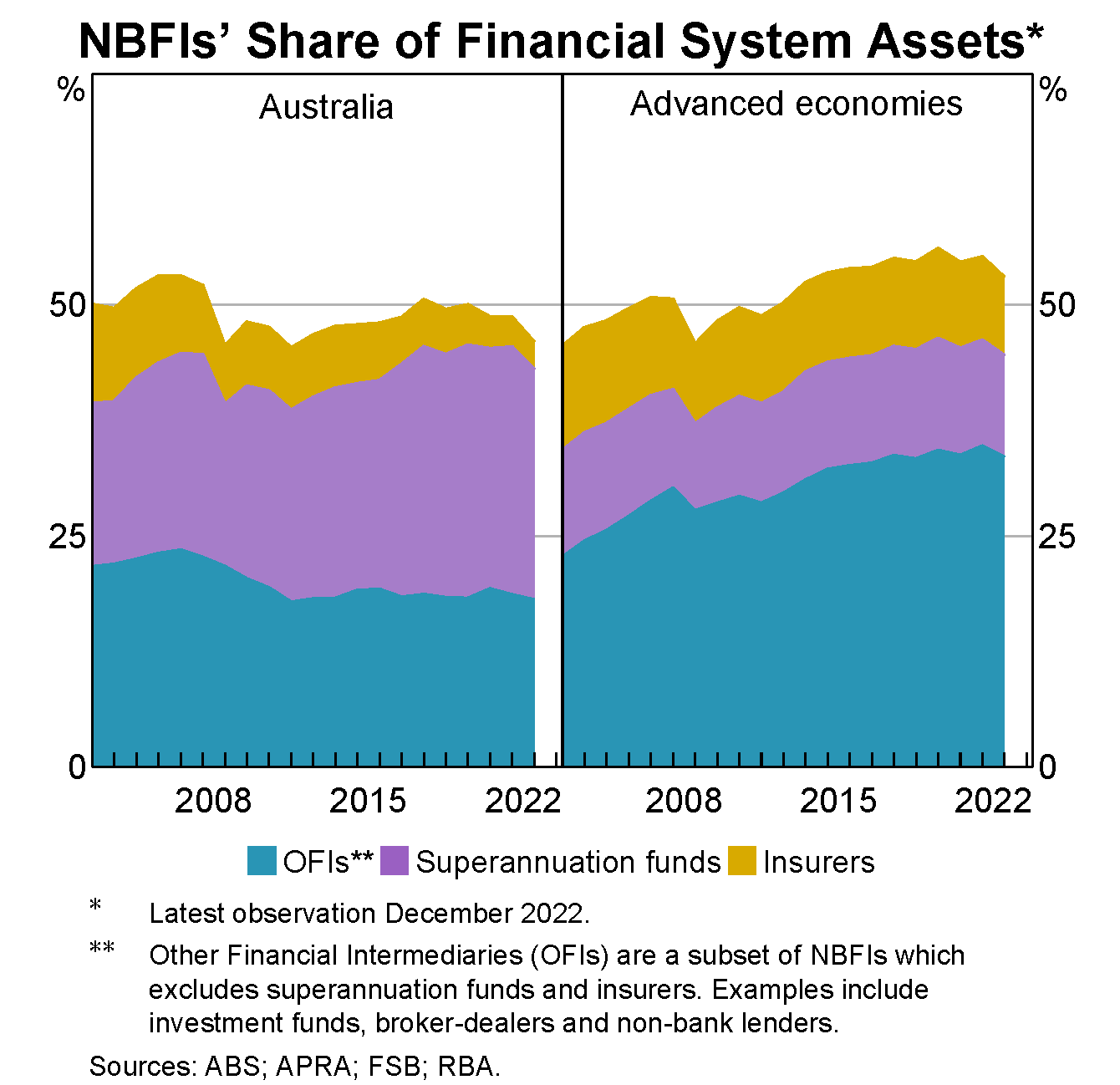
Non-bank FIs’ assets
Finally…
Key takeaways
- Banks exist because markets have frictions. In a frictionless world, bank credit and bonds are perfect substitutes and banks add nothing (Modigliani and Miller 1958; Freixas and Rochet 2023).
- Maturity transformation (Diamond and Dybvig 1983): banks turn liquid short-term deposits into illiquid long-term loans — providing liquidity insurance to households, at the cost of run risk.
- Delegated monitoring (Diamond 1984): one diversified monitor per borrower beats \(m\) duplicated monitors — total costs fall from \(nmK\) to \(nK\).
- The Australian landscape: ADIs (banks, credit unions, building societies) are APRA-regulated and the focus of this course; non-ADI FIs and insurers/fund managers complete the system.
- The model is being challenged — FinTech, BigTech, CBDCs, and the shift from “originate and hold” to “originate and distribute”.
Before next week
One small mission (5 minutes, genuinely useful):
- Find out who actually owns your bank. Up is Bendigo & Adelaide Bank. Ubank is NAB. Bankwest is CBA. St.George is Westpac. Yours?
- Find your bank on APRA’s register of ADIs. If it’s there, your deposits are protected up to $250,000 — we’ll see why that matters in Week 8.
Bring your answer next week — some of you will be surprised.
Next week: what can go wrong — a full tour of every risk on a bank’s balance sheet, and why regulators watch banks more closely than any other industry.
Suggested readings
- The Financial Stability Review published semi-annually by the RBA.
- Global Pension Rankings by the Super Members Council.
References
AFIN8003 Banking and Financial Intermediation